
Tree Plantation Benefits for Rural Livelihoods: How Trees Power Village Economies
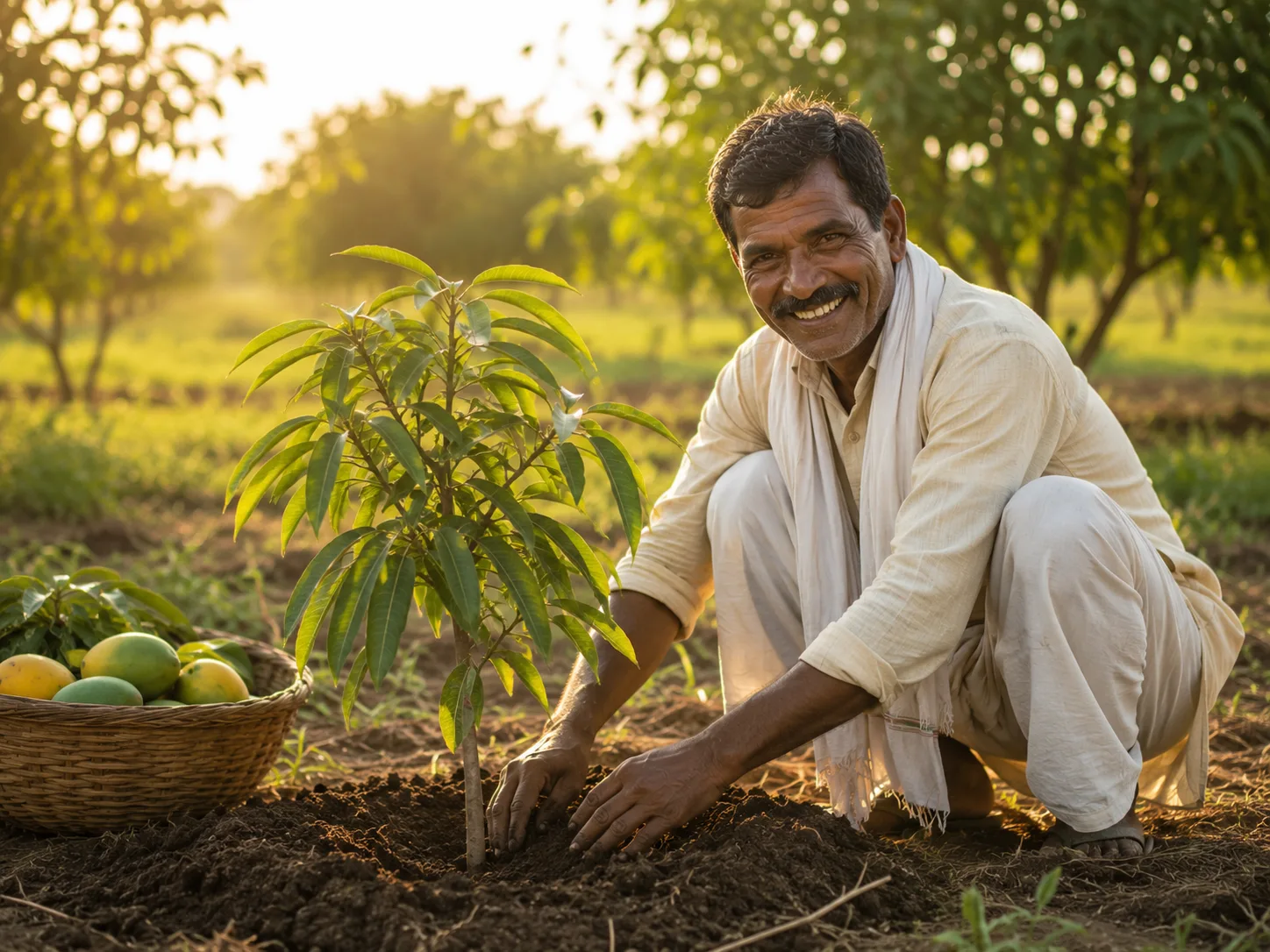
Summary: How Tree Plantation Transforms Rural Livelihoods
Tree plantation directly strengthens rural livelihoods by diversifying household income, improving agricultural productivity, and generating local green jobs. In rural India, integrating native fruit, timber, and medicinal trees into farming landscapes can increase annual household income by 25% to 40%. Trees act as a financial safety net against crop failure, improve groundwater levels, reduce reliance on chemical fertilizers, and provide sustainable resources like fodder, fruit, and firewood for generations.
The Economic Challenge in Rural India
For millions of smallholder farming families across rural India and Gujarat, relying on a single seasonal crop comes with severe risks. Unpredictable monsoons, sudden heatwaves, depleting groundwater tables, and market price crashes can wipe out an entire season’s earnings in days.
When a harvest fails, families often fall into debt cycles or are forced into distress migration to urban centers.
This is where the importance of tree plantation for community resilience becomes vital. Trees transform vulnerable farmlands into multi-tiered, climate-resilient production systems that produce value year-round.
4 Major Tree Plantation Benefits for Rural Livelihoods
When charitable organizations like Sanderi Gami Foundation partner with rural communities to plant native trees, the benefits extend far beyond carbon storage. Here are the four primary ways tree planting powers rural economies:
1. Diversified Household Income Streams (Non-Timber Forest Products)
Monoculture farming provides income only once or twice a year during harvest. In contrast, agroforestry and community plantations create continuous revenue streams throughout the seasons:
- High-Value Fruits & Nuts: Native species like Mango (Aam), Jamun (Indian Blackberry), and Amla (Indian Gooseberry) yield nutritious produce that can be consumed directly by the family or sold in local mandis (markets).
- Medicinal Bark, Seeds & Gum: Neem seeds and oil, Moringa (Drumstick) leaves, and Acacia (Baval) gum have strong commercial demand in pharmaceutical and organic wellness industries.
- Sustainable Fuelwood & Timber: Pruned branches provide domestic cooking fuel, eliminating the need to purchase costly LPG refills or commercial firewood.
2. Safeguarding Crop Yields & Soil Health
Many farmers worry that planting trees near crops will compete for sunlight and nutrients. In reality, scientific boundary planting and intercropping deliver immense benefits of tree plantation for farmers:
- Natural Windbreaks: Rows of trees block fierce dry winds, reducing crop breakage and slowing down evaporation from topsoil.
- Groundwater Recharge: Deep root systems act like natural sponges. They slow down monsoon runoff, allowing rainwater to penetrate deep into village aquifers and raising well water levels.
- Nutrient Recycling & Nitrogen Fixation: Leguminous trees fix atmospheric nitrogen into the soil, while fallen leaf litter decomposes into rich organic humus, improving soil moisture retention by up to 30%.
3. Drastically Reducing Farm Input Costs
Chemical fertilizers, pesticides, and cattle fodder represent a major chunk of an Indian farmer’s seasonal budget. Multipurpose trees significantly lower these overhead expenses:
- Organic Pest Management: Neem extracts and leaves serve as proven, non-toxic bio-pesticides.
- High-Protein Cattle Fodder: Species like Subabul, Shevri, and Neem leaves provide free, nutrient-dense fodder for dairy cattle, boosting daily milk yields and household dairy revenue.
4. Creating Local Green Jobs & Youth Employment
Tree plantation initiatives create tangible work opportunities right within the village:
- Nursery Management: Local women’s self-help groups and youth are trained to cultivate saplings, manage seedbeds, and run community nurseries.
- Plantation & Irrigation Care: From digging pits to installing drip lines and seasonal pruning, plantation projects provide dignified, community-driven employment.
Economic & Livelihood Impact Breakdown
The table below outlines how different tree categories translate directly into measurable financial and ecological returns for rural families:
| Tree Category & Common Species | Primary Economic Output | Impact on Rural Household Livelihood |
|---|---|---|
| Fruit & Nutrition Trees (Jamun, Amla, Mango, Gunda) | Fresh fruit sales, pickles, value-added products | +25% to +40% direct addition to annual household income |
| Multipurpose & Medicinal Trees (Neem, Moringa, Peepal) | Bio-pesticides, medicinal leaves, natural cattle fodder | Saves ₹8,000–₹15,000 annually on chemical fertilizers and feed |
| Nitrogen-Fixing Boundary Trees (Desi Baval, Subabul, Gliricidia) | Soil enrichment, wind shelter, organic mulch | Increases adjoining crop yields by 15% to 25% |
| Community Forest Saplings (Banyan, Mahua, Karanj) | Groundwater recharge, honey production, biodiversity | Long-term ecological insurance and flood prevention |
Why Native Trees Thrive Best in Gujarat
In semi-arid and rural regions of Gujarat, selecting the right species is the difference between a thriving forest and a failed plantation. Exotic species often consume excessive groundwater and offer little nutritional value to local livestock.
At Sanderi Gami Foundation, our plantation drives prioritize resilient indigenous species tailored to Gujarat’s climate:
- Neem (Azadirachta indica): Drought-hardy, purifies air, yields seeds for organic oil, and repels pests.
- Amla (Phyllanthus emblica): Rich in Vitamin C, high market demand for juices and Ayurvedic medicines.
- Jamun (Syzygium cumini): Highly profitable fruit crop that thrives along water boundaries and marshy village ponds.
- Gunda / Lasoda (Cordia dichotoma): Highly popular in Gujarat for traditional pickles (Gunda Sambharo), providing high market returns with minimal water needs.
Explore our latest plantation milestones on our Greenery Initiative page and see real photos from our drives in the Community Gallery.
How Sanderi Gami Foundation Connects Greenery with Education
We believe that sustainable rural development requires an integrated approach. Along with restoring green cover through community tree plantation drives, our foundation actively supports rural children with foundational learning resources and school materials.
By planting fruit-bearing and shade trees inside rural school compounds, we create healthy outdoor study environments, teach children environmental stewardship, and provide fresh fruits for school midday meals. Learn more about our parallel work on our Education Initiative page.
Frequently Asked Questions
What are the main benefits of tree plantation for rural livelihoods?
Tree plantation provides rural families with multiple income streams through the sale of fruits, medicinal seeds, and timber. It also shields agricultural crops from extreme heat, raises groundwater levels, lowers fertilizer costs, and generates local employment through nursery management and sapling maintenance.
How do trees help smallholder farmers increase their income?
Integrating trees into farmlands (agroforestry) can increase a farming family’s net income by 25% to 40%. Trees act as an economic buffer during drought or crop failure, while also providing free livestock fodder, natural compost, and value-added produce like fruits and herbal extracts.
Which tree species are best for planting in rural Gujarat?
Native species like Neem, Jamun, Amla, Gunda, Peepal, and Desi Baval are best suited for rural Gujarat. These trees require minimal water once established, withstand severe summer temperatures, and provide strong economic and ecological value to local farmers.
How can I participate in Sanderi Gami Foundation’s next plantation drive?
You can volunteer, sponsor saplings, or join our community drives. Check our upcoming activities on our Events Page or connect directly with our volunteer network on WhatsApp.
Be Part of the Green Movement
Every sapling planted today is a promise of financial stability, cleaner air, and food security for rural families tomorrow.
Whether you are a volunteer, a student, or a community partner, your support helps us plant more native trees and empower rural communities across Gujarat.
👉 Join our Community WhatsApp Group to participate in our next drive.
👉 View Upcoming Foundation Events to get involved on the ground.